
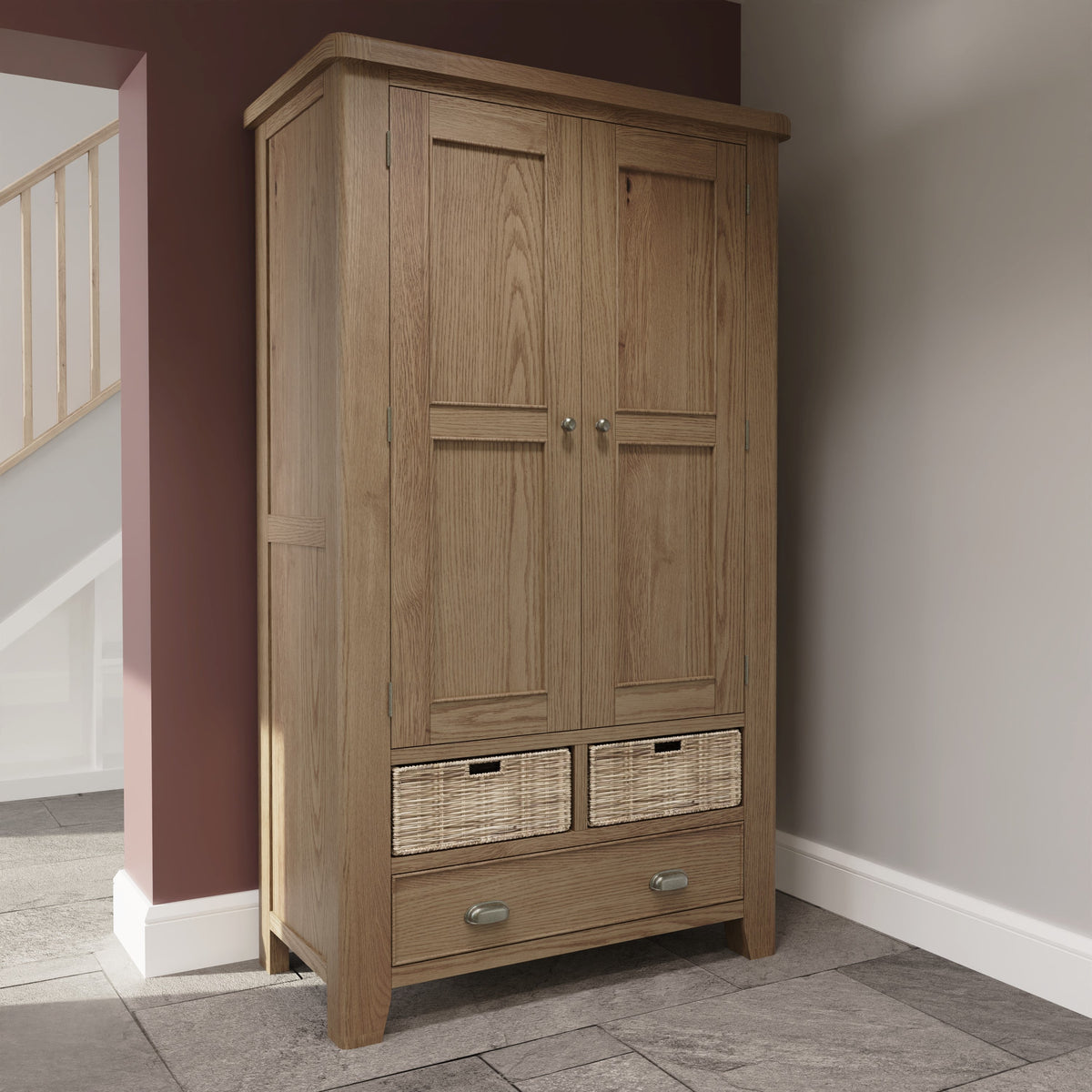
Larder Units
A freestanding larder unit gives your kitchen a proper pantry without a refit. Tall doors open to shelves and drawers for food, jars and small appliances. Our oak larders come from ranges like Horner. They suit country, traditional and modern kitchens alike. Standard delivery is free to mainland UK.


Larder Units: Your Freestanding Pantry
Kitchens never seem to have enough storage. A larder unit fixes that in one move. It's tall, deep and organised. Everything from cereal to the stand mixer can live inside.
What Goes in a Larder?
- Dry foods like pasta, rice, flour and cereal.
- Tins, jars, sauces and spices.
- Small appliances such as toasters and blenders.
- Baking trays, mixing bowls and lunchboxes.
Organising Your Larder
Keep everyday items at eye level. Store heavy appliances low down. Use clear jars so you can see what's running low. Baskets keep snacks and small packets together. Label shelves to help the whole family keep it tidy.
Measuring for a Larder
Larder units are tall. Measure your ceiling height and any wall cupboards nearby. Check the door can open fully past worktops and appliances. Leave space in front to stand and reach in comfortably.
Freestanding vs Fitted
A freestanding larder costs less than a fitted one. It needs no plumbing or worktop changes. You can take it with you when you move. It also adds a furniture feel to a fitted kitchen.
Matching Your Kitchen
Pair your larder with a dresser base and dresser top. Add a kitchen table and bench for a farmhouse feel. See all kitchen furniture.
Planning a New Kitchen?
We design and build bespoke kitchens with built-in larders. Get a guide price with our kitchen price estimator.
Larder Units: Frequently Asked Questions
What is a larder unit?
A tall freestanding cupboard with shelves and sometimes drawers, used as a pantry for food and kitchen equipment.
How do I organise a larder cupboard?
Keep daily items at eye level, heavy items low and snacks in baskets. Clear jars help you see what needs restocking.
Is a freestanding larder better than a fitted one?
It costs less, needs no installation and moves with you. A fitted larder suits a full kitchen redesign.
Should a larder unit be fixed to the wall?
Yes. Tall units should be secured to the wall to prevent tipping, especially when fully loaded.