

Wardrobes
Give your clothes the space they deserve with a freestanding wardrobe. Our oak wardrobes come from the Newton, Rutherford and Horner ranges. Choose double or larger designs with hanging rails, shelves and drawers. They match our beds and chests, so your bedroom looks planned. Standard delivery is free to mainland UK.
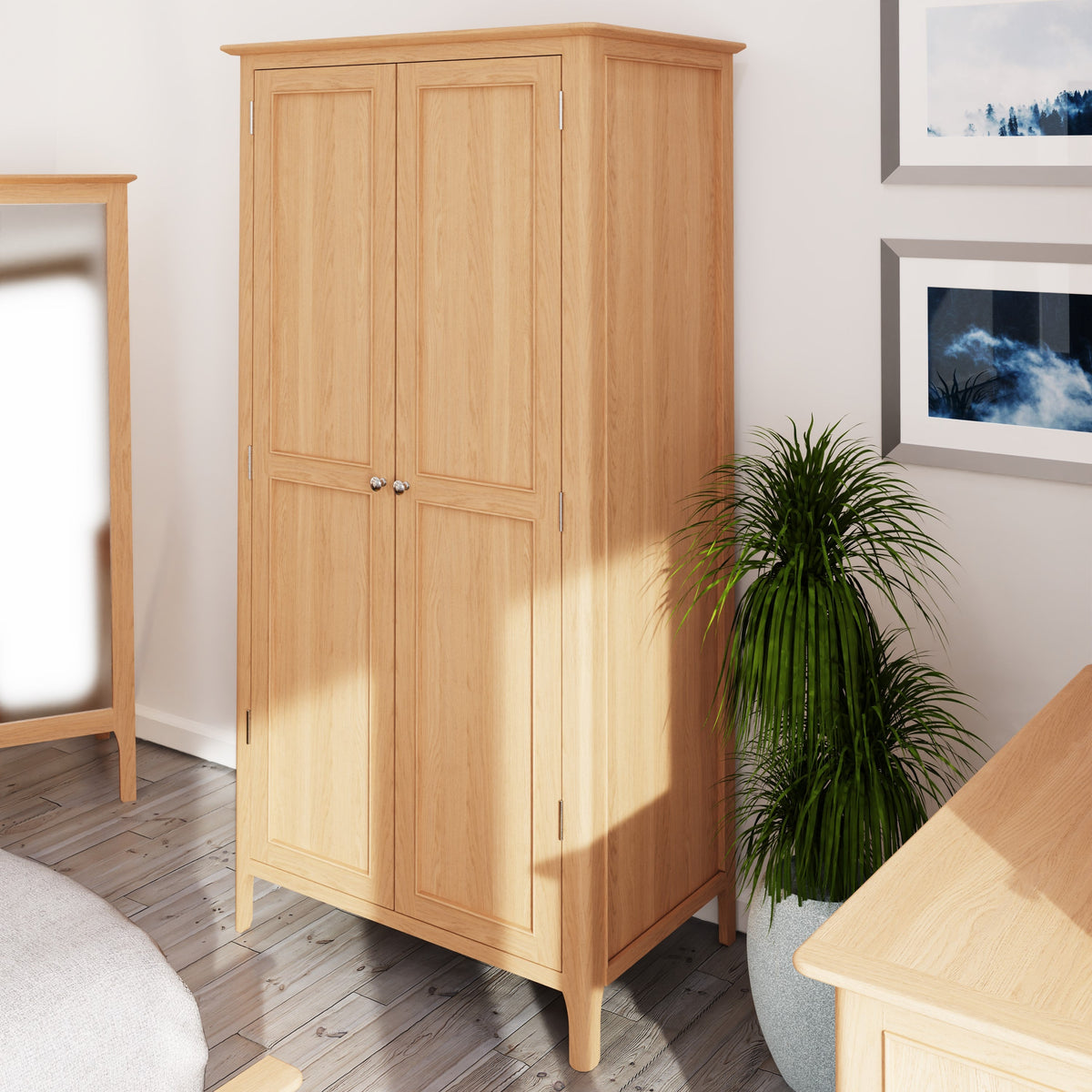
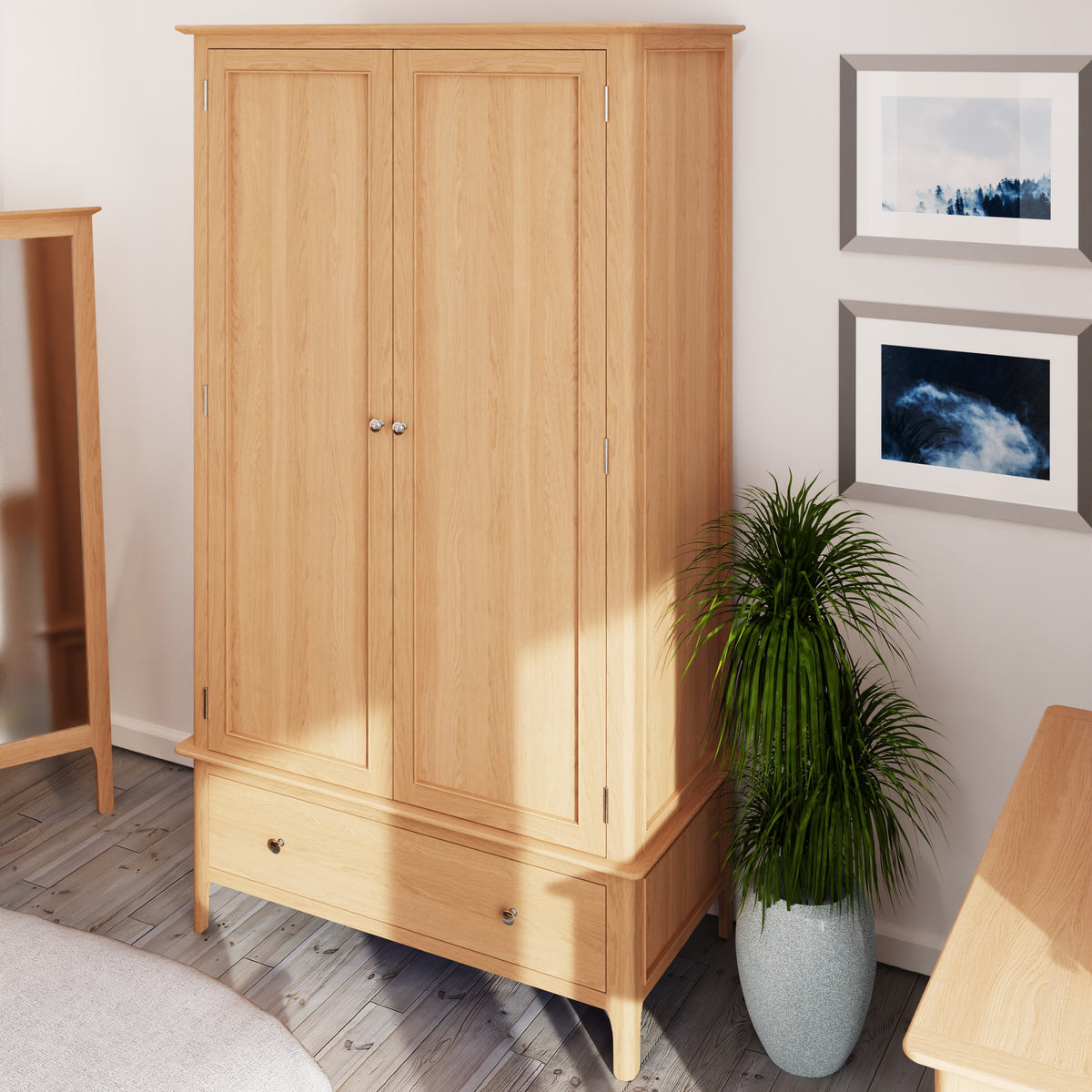
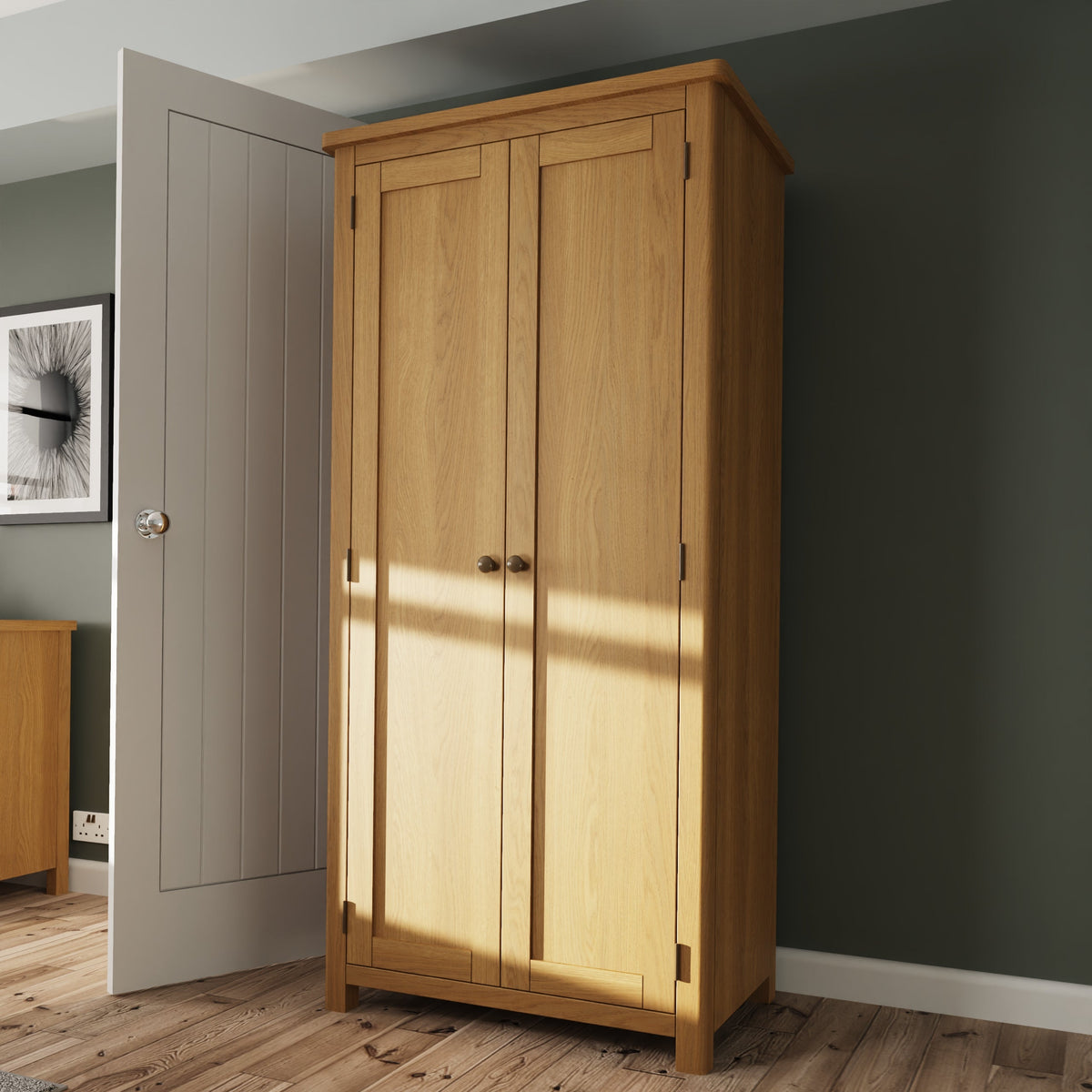
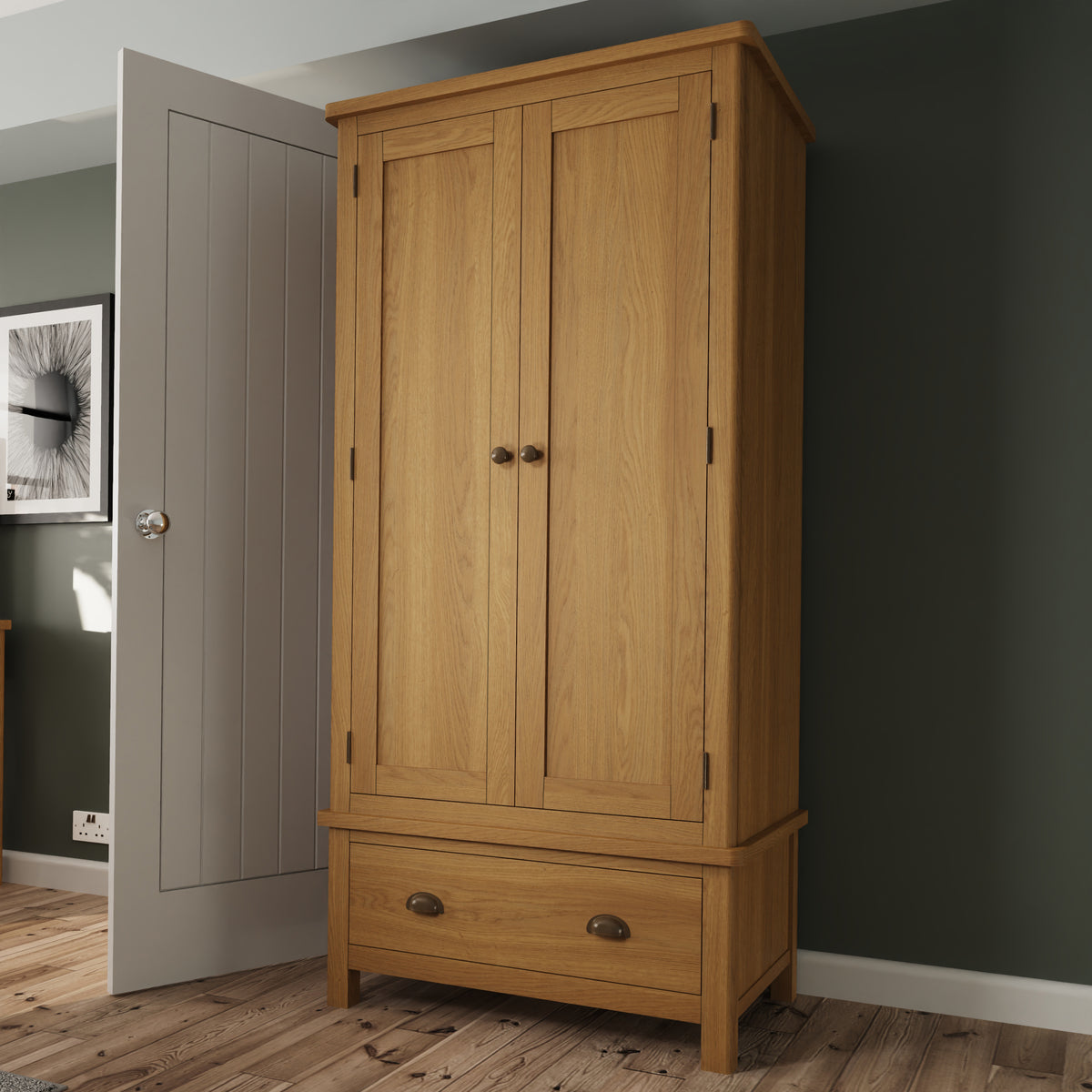
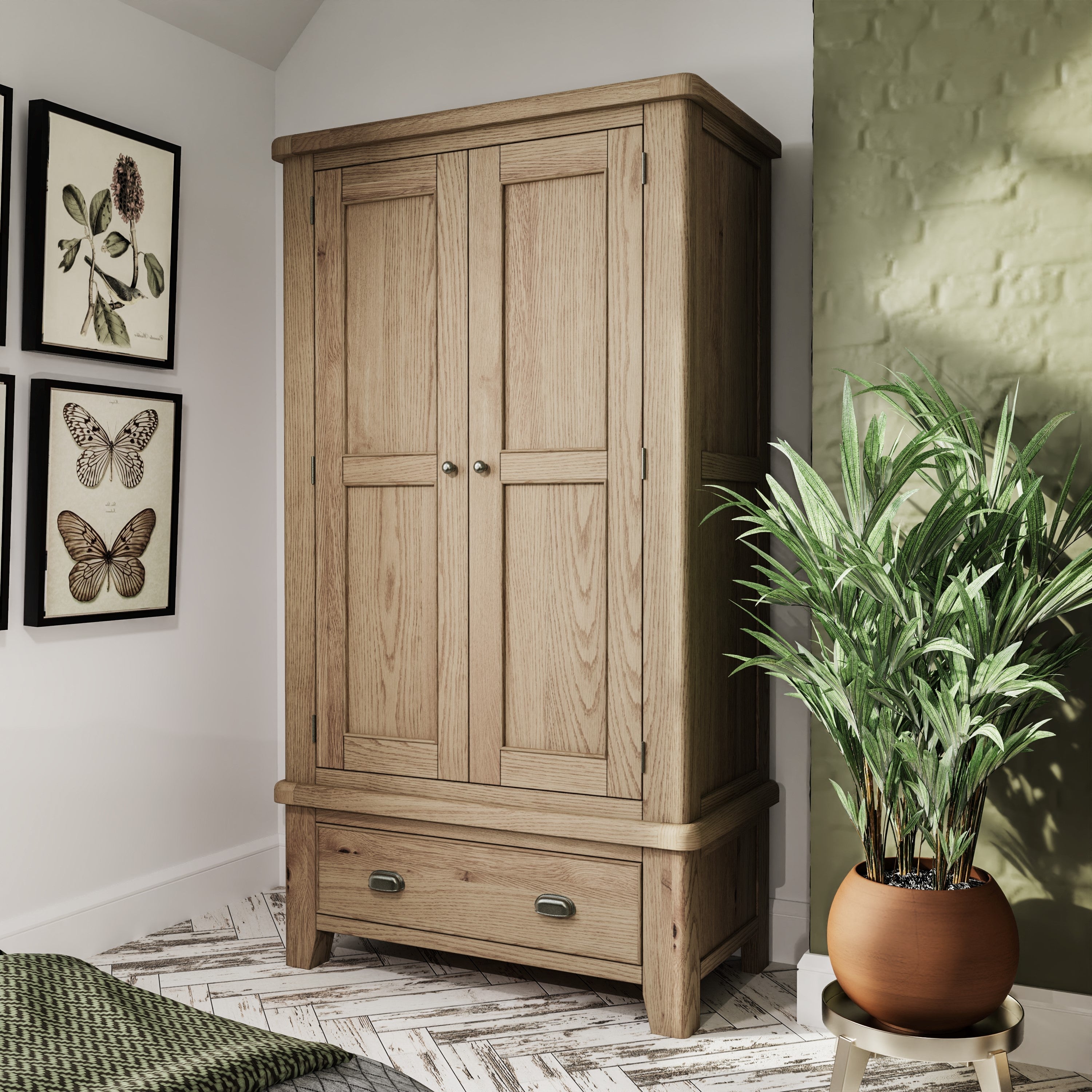
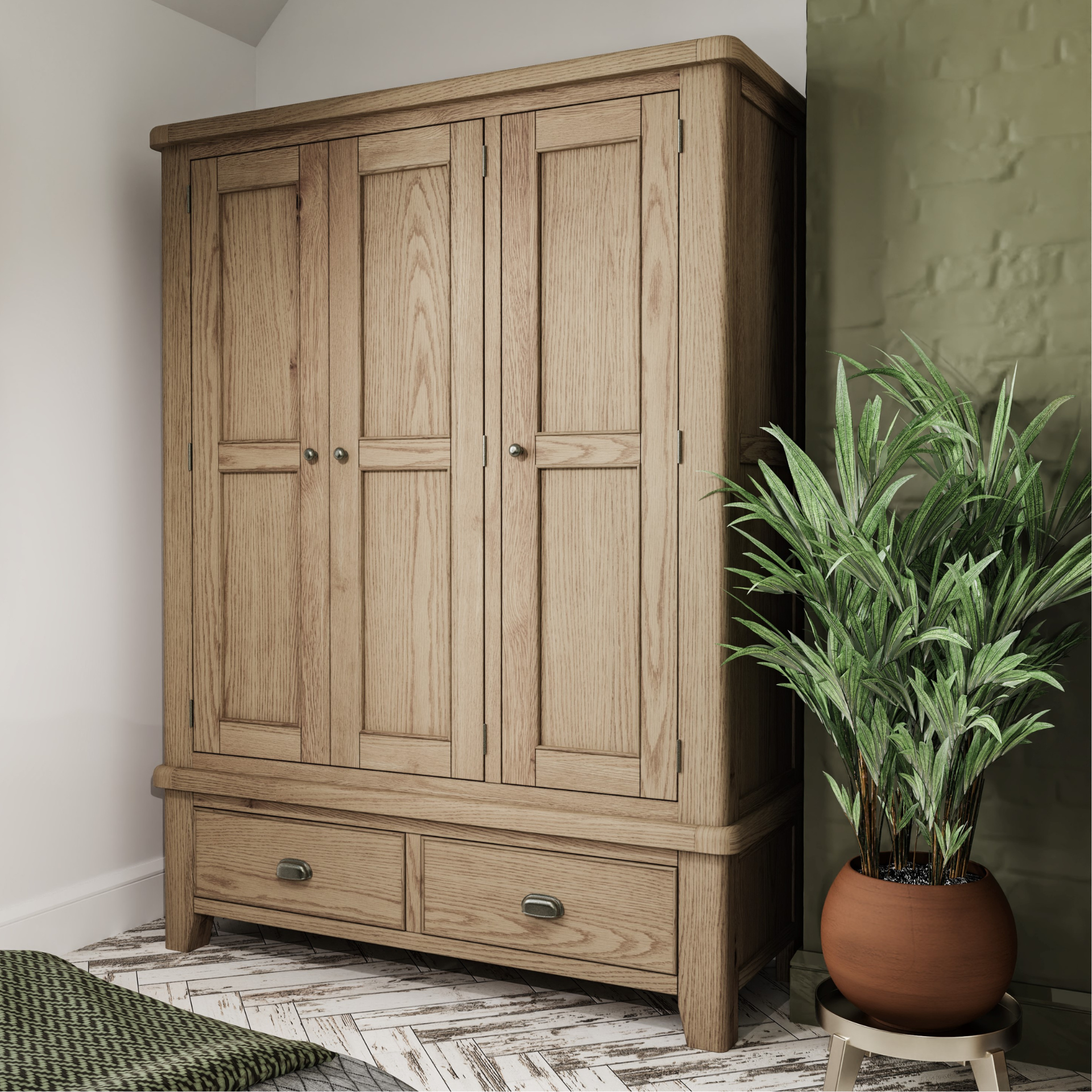
Freestanding Wardrobes Built for Everyday Life
A wardrobe is often the biggest piece in a bedroom. It needs to store a lot and still look good. Freestanding wardrobes give you flexibility. They're easier to move than fitted units and cost less.
Measure Carefully
Start with the wall space. Then check the ceiling height, including any coving or sloped ceilings. Allow room for doors to swing open fully. Hinged doors need about 50 to 60cm of clear space in front.
Don't forget the route into the room. Measure doorways, stairs and landings. Most wardrobes arrive flat-packed or in sections for easier access.
Inside the Wardrobe
- Hanging rails – for shirts, dresses and coats.
- Shelves – for folded jumpers, bags and boxes.
- Drawers – for smaller items and accessories.
Think about what you own most. Long dresses need full-height hanging. Lots of knitwear suits more shelves.
Our Wardrobe Ranges
Newton wardrobes bring natural oak and Danish-inspired lines. Rutherford offers a rustic oak look at great value. Horner has a warm oak finish and soft corners. Each range includes matching bedroom furniture.
Need Something Made to Fit?
Alcoves, sloped ceilings and loft rooms can be tricky. Our team designs fitted wardrobes made to measure. See examples in our previous projects or ask about bespoke furniture.
Complete the room with a chest of drawers, bedsides and a matching bed.
Wardrobes: Frequently Asked Questions
How much space do I need in front of a wardrobe?
Allow 50 to 60cm for hinged doors to open, plus walking space. Sliding doors need less room in front.
Do your wardrobes need assembling?
Most arrive flat-packed or in sections for easy access. Our White Glove service, from £50, includes full assembly.
Can you make fitted wardrobes?
Yes. We design and build bespoke fitted wardrobes for alcoves, lofts and awkward spaces. Contact our Southsea team for a quote.
Should a wardrobe be fixed to the wall?
Yes. Tall furniture should be secured to the wall with suitable fixings to prevent tipping.